
Why Is America Moving Towards Organic Farming? Benefits, Growing Demand and the Future of Sustainable Agriculture
Discover why organic farming is growing in the USA. Explore USDA Organic certification, market demand, farming benefits, business opportunities and the future of sustainable agriculture.
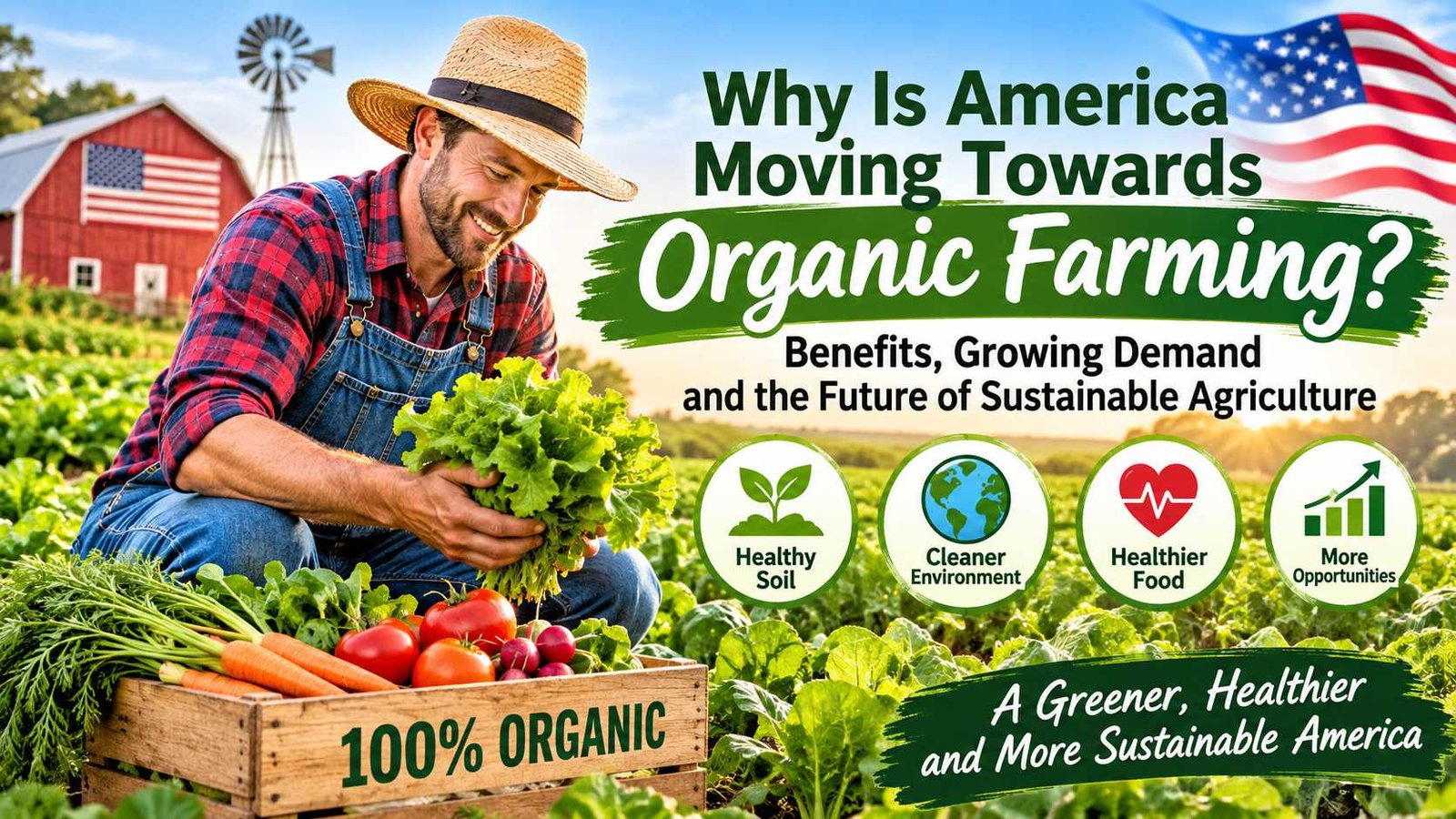
Introduction: Why Is Organic Farming Growing in the United States?
Organic farming is becoming an increasingly important part of the American agricultural industry. Across the United States, consumers are paying more attention to food quality, farming practices, environmental sustainability and the origins of the products they purchase.
From California vegetable farms to family-owned farms in the Midwest, organic agriculture is creating new opportunities for farmers, food producers, retailers and agricultural entrepreneurs.
Americans are increasingly interested in organic vegetables, fruits, dairy products, meat, eggs, grains and packaged foods. This growing demand is encouraging agricultural businesses to explore more sustainable production methods and invest in organic food supply chains.
According to the Organic Trade Association's 2026 Organic Market Report, U.S. sales of certified organic products reached approximately $76.6 billion in 2025, representing 6.8% annual growth. Organic food sales alone reached $70.1 billion.
These figures demonstrate the growing importance of organic products in the American marketplace.
But why is the United States moving towards organic farming? What benefits does organic agriculture offer? Can American farmers earn more from organic production? And what opportunities will this industry create over the next decade?
Let's explore the reasons behind America's growing interest in organic agriculture.
1. Increasing American Consumer Demand for Organic Food
One of the biggest reasons behind the growth of organic farming in the United States is increasing consumer interest in food quality and transparency.
Modern American consumers want to understand how their food is produced, where it comes from and what agricultural practices are used during cultivation.
Many families are choosing organic products because they want to reduce exposure to certain pesticide residues, support environmentally responsible farming and purchase food produced under recognised organic standards.
Popular organic products in the United States include:
- Organic apples, berries, oranges and bananas.
- Organic vegetables and leafy greens.
- Organic milk, cheese and yogurt.
- Organic eggs and poultry.
- Organic beef and meat products.
- Organic rice, oats and other grains.
- Organic coffee, tea and spices.
- Organic baby food and packaged groceries.
As consumer awareness increases, organic products are becoming more visible in supermarkets, specialty food stores, farmers markets and online grocery platforms.
2. The U.S. Organic Food Market Is Growing Rapidly
The American organic food industry has developed into a major segment of the national food economy.
According to the Organic Trade Association, the U.S. organic marketplace reached $76.6 billion in certified organic product sales in 2025.
Important market developments include:
- Organic food sales reached approximately $70.1 billion in 2025.
- Total certified organic product sales grew by 6.8%.
- Organic fresh produce remained the largest product category.
- Organic grocery products continued to attract consumer demand.
- Organic dairy, eggs, meat and packaged foods contributed to market expansion.
Fresh produce is particularly important in the American organic marketplace. Organic berries, vegetables, bananas and other fruits are popular choices among consumers.
This growing market creates opportunities for domestic farmers, organic food manufacturers, distributors, wholesalers and agricultural businesses.
3. Improving Soil Health Through Organic Farming
Healthy soil is one of the most important foundations of sustainable agriculture.
Organic farming focuses on maintaining soil fertility through natural and approved agricultural practices instead of depending primarily on synthetic fertilisers.
Some common soil management practices include:
- Composting and organic matter recycling.
- Vermicomposting.
- Crop rotation.
- Cover cropping.
- Green manuring.
- Mulching.
- Reduced soil disturbance where appropriate.
These practices can improve soil structure, support beneficial microorganisms, increase soil organic matter and help protect agricultural land from erosion.
Healthy soil also plays an important role in water management and long-term farm productivity.
4. Reducing Dependence on Synthetic Agricultural Chemicals
Conventional agriculture uses different fertilisers and pesticides to manage crop production and protect plants from pests and diseases.
However, excessive or inappropriate use of certain agricultural chemicals can create environmental concerns, including water contamination, harm to beneficial organisms and pesticide exposure.
USDA-certified organic farming follows strict production standards that prohibit many synthetic substances while allowing certain approved inputs under specified conditions.
Organic farmers may use:
- Approved compost and organic fertilisers.
- Crop rotation and mixed cropping.
- Biological pest management.
- Approved botanical pest control products.
- Beneficial insects and natural predators.
- Physical pest barriers and mulching.
Organic does not mean pesticide-free. Organic farmers may use approved pesticides when permitted by organic regulations and when appropriate preventive methods are insufficient.
5. Environmental Benefits of Organic Agriculture
Environmental sustainability is another important reason behind the growing interest in organic farming across America.
Well-managed organic agricultural systems can support biodiversity, improve soil health and reduce reliance on certain synthetic agricultural inputs.
Protecting Biodiversity
Crop rotation, diverse planting systems and suitable habitat management can support beneficial insects, earthworms, pollinators and other organisms that contribute to healthy agricultural ecosystems.
Reducing Soil Erosion
Cover crops, mulching and suitable soil management practices can help protect farmland against wind and water erosion.
Supporting Water Quality
Careful nutrient management and reduced dependence on certain synthetic inputs can help reduce the risk of agricultural pollution entering nearby waterways.
Improving Farm Sustainability
Organic farming encourages farmers to manage soil, water, crops and biodiversity as interconnected parts of an agricultural ecosystem.
6. Can American Farmers Earn More Through Organic Farming?
Organic agriculture can provide additional business opportunities for American farmers. Certified organic products may receive premium prices in certain markets because consumers are willing to pay more for products carrying recognised organic certification.
However, higher prices do not automatically guarantee higher profits. Farmers must consider production expenses, labour, certification, crop yields, storage, transportation and marketing costs.
Some opportunities for American organic farmers include:
- Growing organic vegetables and fruits.
- Producing organic berries and leafy greens.
- Operating organic dairy farms.
- Raising organic poultry and livestock.
- Producing organic grains and pulses.
- Manufacturing organic packaged foods.
- Selling directly through farmers markets and online platforms.
- Supplying restaurants, grocery stores and organic food distributors.
Farmers who develop reliable customer relationships and efficient production systems may improve their chances of building profitable organic businesses.
7. Understanding USDA Organic Certification in America
One of the most important aspects of the American organic food industry is USDA Organic certification.
The United States Department of Agriculture (USDA) administers the National Organic Program (NOP), which establishes standards for the production, handling and marketing of certified organic agricultural products.
USDA Organic certification helps consumers identify products produced according to established organic requirements.
Important USDA Organic Requirements
- Farmers must follow applicable USDA organic production standards.
- Land used for organic crops generally must not have prohibited substances applied during the previous three years.
- Farmers must maintain appropriate production records.
- Organic operations must follow an approved Organic System Plan.
- Certified operations undergo annual inspections.
- Organic products must meet applicable handling, processing and labelling requirements.
Farmers transitioning from conventional to organic agriculture should understand that the three-year land transition requirement can affect when crops may be marketed as organic.
Certification costs vary according to the size and complexity of the operation. Eligible businesses may qualify for USDA organic certification cost-share assistance.
Farmers should contact an accredited organic certifying agent to understand the requirements for their specific operation.
8. The Importance of Compost and Vermicompost in Organic Farming
Compost and vermicompost are important soil amendments used in sustainable agriculture.
Vermicompost is produced when earthworms and microorganisms break down suitable organic materials into a nutrient-rich soil amendment.
American farmers and gardeners can use compost and vermicompost in:
- Organic vegetable production.
- Fruit orchards.
- Greenhouse cultivation.
- Flower farming.
- Nursery production.
- Home gardening.
- Landscaping and soil improvement.
Vermicomposting also provides an opportunity to convert suitable biodegradable materials and agricultural waste into useful soil amendments.
For agricultural entrepreneurs, commercial composting and vermicompost production may offer opportunities to supply farms, nurseries, landscapers and home gardeners.
9. Why Organic Farming Is Important for the American Economy
The growth of organic agriculture creates opportunities beyond farming itself.
The organic food industry supports businesses involved in production, food processing, packaging, transportation, distribution, retail and agricultural services.
Some important business opportunities include:
- Organic food production and farming.
- Organic food processing and packaging.
- Compost and vermicompost manufacturing.
- Organic seed and nursery businesses.
- Organic grocery stores.
- Online organic food marketplaces.
- Organic product distribution.
- Farm consulting and certification support services.
- Agricultural technology and soil testing services.
- Direct-to-consumer farm businesses.
By developing domestic production and distribution networks, the United States can create additional opportunities for agricultural businesses and rural communities.
10. Organic Farming Opportunities Across Different U.S. States
The United States has diverse climates, soil conditions and agricultural regions. This creates opportunities for different types of organic farming depending on local growing conditions and market demand.
California
California offers opportunities in organic vegetables, berries, citrus fruits, grapes, nuts and other specialty crops.
Washington
Washington is an important agricultural region with opportunities in organic apples, cherries, pears and other fruit production.
Oregon
Oregon offers opportunities in organic vegetables, berries, hazelnuts, nursery production and specialty agricultural products.
New York
New York farmers can explore organic dairy production, vegetables, apples, grains and specialty food markets.
Wisconsin
Wisconsin has opportunities in organic dairy farming, livestock production, vegetables and grain cultivation.
Colorado
Colorado farmers can explore organic vegetables, grains, specialty crops and controlled-environment agriculture.
Texas
Texas offers opportunities in organic vegetables, livestock, grains, fruit production and sustainable agricultural businesses, depending on regional climate and water availability.
11. Challenges Facing Organic Farmers in the United States
Despite the growing market, organic agriculture also presents several challenges for American farmers.
Higher Production and Labour Costs
Some organic production systems require additional labour, monitoring and management compared with conventional farming.
Certification Expenses
Organic certification requires documentation, inspections and compliance with established standards. Costs vary according to farm size and complexity.
Transition Period
Farmers converting conventional land to organic production generally need to meet a 36-month period without prohibited substances before selling crops from that land as organic.
Pest and Disease Management
Managing pests and diseases without prohibited synthetic products can require additional planning, monitoring and technical knowledge.
Market Competition
Farmers must compete with other producers, imported organic products and changing consumer purchasing habits.
Supply Chain and Distribution
Storage, transportation, processing and access to reliable buyers can influence the profitability of organic agricultural businesses.
Training, agricultural research, financial planning and market development are important for overcoming these challenges.
12. The Future of Organic Farming in America: 2026–2036
Over the next decade, organic agriculture may become increasingly connected with technology, consumer preferences and sustainable food production.
Some important developments to watch include:
- Smart Farming: Sensors, drones and digital tools may help farmers monitor crop health, irrigation and soil conditions.
- Online Organic Marketplaces: Digital platforms may connect organic farmers directly with American consumers.
- Food Traceability: Digital tracking systems may help consumers understand product origins and production practices.
- Organic Food Processing: Businesses may develop more organic packaged foods, snacks, beverages and ready-to-eat products.
- Advanced Composting: Improved composting technologies may support agricultural waste recycling.
- Precision Agriculture: Digital technologies may help farmers use water and other agricultural resources more efficiently.
- Domestic Organic Production: More investment in local supply chains could create opportunities for American farmers and food producers.
The long-term success of the organic industry will depend on consumer demand, farm profitability, scientific research, regulations and reliable supply chains.
13. How to Start an Organic Farming Business in the USA
Starting an organic farming business requires planning, agricultural knowledge and an understanding of the American organic marketplace.
Here are some practical steps for beginners:
- Research Your Local Market: Identify demand for organic vegetables, fruits, dairy, grains or other agricultural products in your area.
- Select Suitable Land: Evaluate soil conditions, water availability, climate and previous land management practices.
- Choose Your Crops: Select crops according to local growing conditions and potential customers.
- Understand USDA Standards: Study National Organic Program requirements before marketing products as organic.
- Develop a Soil Management Plan: Consider composting, cover crops, crop rotation and suitable organic soil amendments.
- Plan Pest Management: Learn approved preventive and biological pest management practices.
- Maintain Farm Records: Document seeds, inputs, field activities, harvests and sales.
- Find Buyers: Connect with farmers markets, grocery stores, restaurants, distributors and direct customers.
- Develop Your Brand: Build customer trust through product quality, transparency and reliable service.
- Explore Financial Support: Investigate relevant USDA programmes, technical assistance and certification cost-share opportunities.
Conclusion: Organic Farming Is an Important Part of America's Agricultural Future
The growing interest in organic farming reflects a major shift in how American consumers, farmers and businesses think about food production and environmental sustainability.
Increasing consumer demand, soil health awareness, sustainable agricultural practices and new business opportunities are helping the organic industry expand across the United States.
Organic farming is not without challenges. Farmers must manage production costs, certification, crop yields, pests and market competition. However, businesses that combine sound agricultural practices with efficient marketing and reliable supply chains can find opportunities in this expanding industry.
For American farmers and agricultural entrepreneurs, organic agriculture offers opportunities in crop production, livestock, composting, food processing, nursery businesses and online agricultural marketplaces.
The future of American agriculture should not focus only on producing more food. It should also focus on maintaining healthy soil, protecting natural resources, supporting farmers and building a sustainable food system for future generations.
Frequently Asked Questions (FAQs)
1. Why is organic farming becoming popular in the USA?
Organic farming is gaining popularity because of increasing consumer interest in food production methods, environmental sustainability, soil health and products certified under USDA organic standards.
2. How big is the U.S. organic food market?
According to the Organic Trade Association's 2026 Organic Market Report, certified organic product sales in the United States reached approximately $76.6 billion in 2025, including $70.1 billion in organic food sales.
3. What does USDA Organic certification mean?
USDA Organic certification means an agricultural product or operation complies with the applicable requirements of the USDA National Organic Program. The standards cover production, handling, processing and labelling.
4. Can American farmers make more money through organic farming?
Organic farming can provide access to premium markets, but profitability depends on production costs, crop yields, certification, distribution and customer demand.
5. What crops are suitable for organic farming in the USA?
Depending on regional conditions, farmers can explore organic berries, apples, leafy greens, vegetables, citrus fruits, grains, nuts, herbs and specialty crops.
6. How long does it take to become USDA Organic certified?
Land used for organic crop production generally must have had no prohibited substances applied for at least 36 months before the crop can be sold as organic. The overall certification process also depends on the operation and certifier.
7. Is organic farming completely pesticide-free?
No. Organic farming restricts prohibited synthetic pesticides but permits certain approved pest-control substances under specific conditions. Organic farming also relies on preventive and biological pest management.
8. Is organic food healthier than conventional food?
Organic food may reduce exposure to certain pesticide residues. However, organic certification does not guarantee that every organic food is more nutritious than its conventional equivalent. A balanced diet and proper food safety practices remain important.
9. Is vermicompost useful for organic farming?
Yes. Vermicompost can improve soil organic matter, soil structure and nutrient availability. It is used in vegetable production, fruit cultivation, nurseries and home gardening.
10. What is the future of organic farming in America?
Organic agriculture may benefit from growing consumer demand, technological improvements, online food markets, sustainable farming practices and investment in domestic agricultural production.