
Why Is My Electric Bill So High? 12 Causes & Ways to Save
Discover 12 reasons your electric bill suddenly increased and learn practical ways to reduce electricity usage, improve home energy efficiency, and save money.
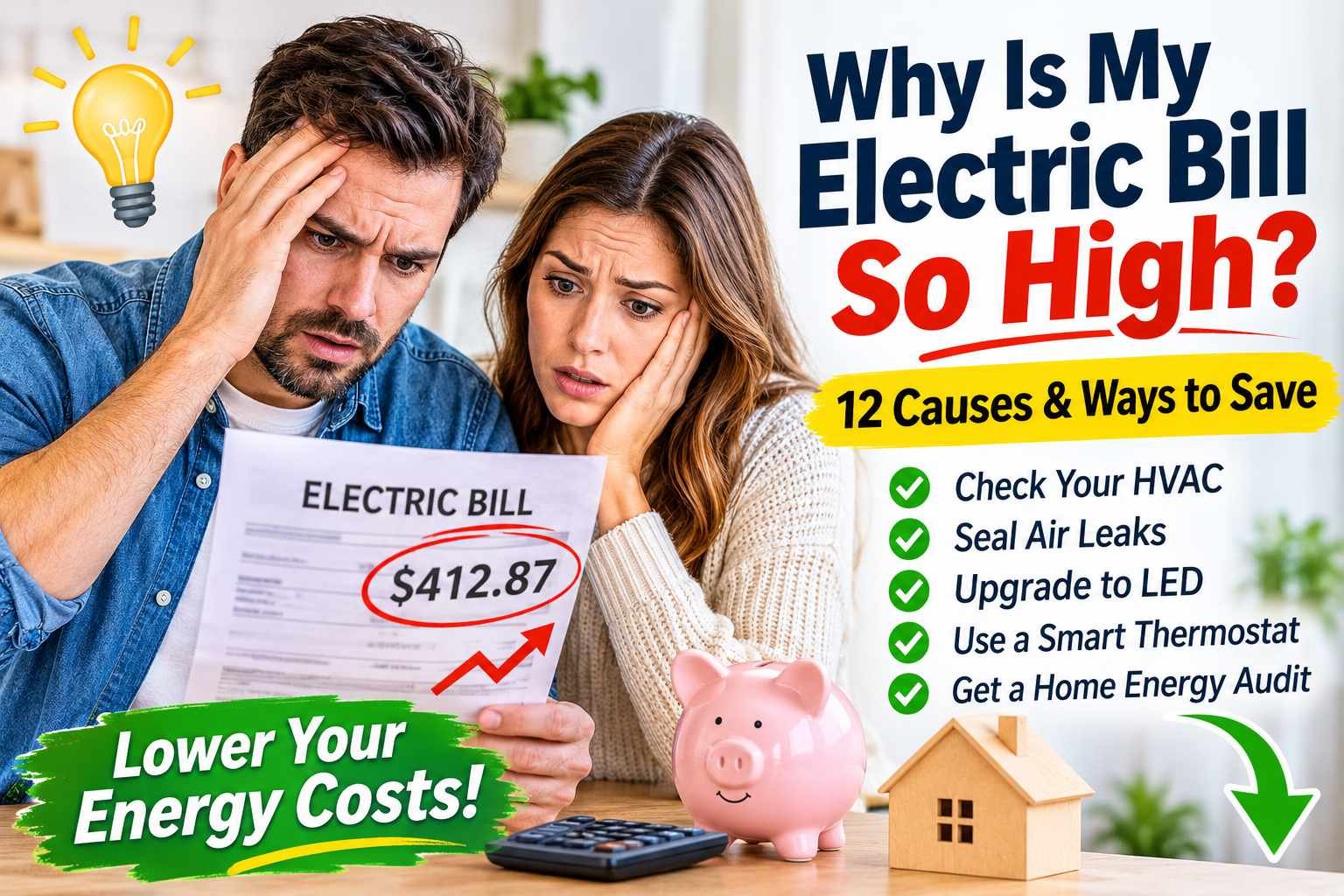
Why Is My Electric Bill So High All of a Sudden? 12 Ways to Find the Problem and Save Money
Published: November 2026
Category: Home Improvement & Energy Saving
Have you recently opened your electricity bill and wondered why it is suddenly so expensive? You are not alone. Many American households are experiencing higher energy expenses, even when their daily routines have not changed significantly.
An unexpectedly high electric bill can have several causes. Your heating and cooling system may be working harder, an appliance could be consuming too much electricity, or hidden air leaks might be making your home less energy-efficient.
The good news is that you do not always need to purchase expensive appliances or replace your entire HVAC system to reduce electricity costs.
In this guide, we will explain 12 common reasons your electric bill may have increased suddenly and share practical ways to identify the problem, improve energy efficiency, and save money.
1. Check Your Heating and Cooling System
Heating and cooling systems are among the largest energy consumers in American homes.
If your air conditioner, furnace, or heat pump is operating longer than usual, your electricity consumption may increase.
A dirty air filter can restrict airflow and make the equipment work harder. Incorrect thermostat settings and poorly maintained equipment can also contribute to higher energy consumption.
What you can do:
- Check your HVAC air filter regularly.
- Replace dirty filters according to the manufacturer's recommendations.
- Keep indoor vents unobstructed.
- Schedule professional HVAC maintenance.
- Use appropriate thermostat settings when sleeping or away.
Regular maintenance can help your heating and cooling equipment operate more efficiently.
2. Look for Hidden Air Leaks Around Windows and Doors
You might be paying to heat or cool your home while conditioned air escapes through small openings.
Common locations include:
- Window frames.
- Exterior door gaps.
- Attic entrances.
- Basement openings.
- Electrical outlets on exterior walls.
- Plumbing and utility penetrations.
These small gaps can increase heating and cooling demands.
Simple solution: Use weatherstripping around movable doors and windows. Apply suitable caulk to stationary gaps and consider improving insulation where necessary.
The Department of Energy recommends air sealing and insulation as important home energy-saving measures.
3. Your Water Heater May Be Consuming Too Much Electricity
Electric water heaters can contribute significantly to household energy consumption.
If your water heater operates continuously or has poor insulation, it may use more electricity than necessary.
Check for:
- Incorrect temperature settings.
- Hot water leaks.
- Damaged insulation.
- Excessive hot water usage.
- An aging or malfunctioning heating element.
For many households, setting the water heater to approximately 120°F can help reduce energy use while maintaining suitable hot water temperatures.
Always follow manufacturer instructions and consider professional assistance for electrical or plumbing problems.
4. Old Refrigerators and Freezers Can Increase Electricity Costs
Refrigerators operate throughout the day, making their efficiency important.
Older models may consume more electricity than newer efficient appliances.
Look for these warning signs:
- The refrigerator runs almost continuously.
- The door seal is damaged.
- The condenser area is dusty.
- The refrigerator does not maintain the correct temperature.
- Frost builds up excessively.
Money-saving tip: Keep refrigerator doors closed, inspect door seals, allow proper ventilation around the appliance, and clean accessible components according to the manufacturer's instructions.
5. Standby Power: Appliances That Use Electricity When Turned Off
Some electronic devices continue consuming electricity even when they appear to be switched off.
This is commonly called standby power or phantom energy consumption.
Examples include:
- Televisions.
- Gaming consoles.
- Desktop computers.
- Printers.
- Streaming devices.
- Chargers and smart home equipment.
Unplug devices that do not need continuous power or use a suitable switched power strip.
However, do not disconnect equipment that needs continuous power for safety, security, medical, or essential operating functions.
6. Your HVAC Air Filters May Be Dirty
A dirty HVAC filter can restrict airflow and reduce system efficiency.
This is especially important during winter and summer when heating and cooling systems operate frequently.
ENERGY STAR recommends checking filters monthly during periods of heavy use and replacing them as needed.
What to do:
- Locate the HVAC filter.
- Check its condition.
- Identify the correct replacement size.
- Install a compatible filter in the correct direction.
- Follow the manufacturer's maintenance schedule.
If airflow remains poor, contact an HVAC professional.
7. Poor Home Insulation Can Waste Energy
Insulation helps maintain indoor temperatures by reducing heat transfer between your home and the outside environment.
Homes with insufficient insulation may require more heating during winter and more cooling during summer.
Pay attention to:
- Attic insulation.
- Exterior walls.
- Basement ceilings.
- Crawl spaces.
- Garage walls adjoining living areas.
Adding appropriate insulation can improve comfort and reduce energy waste.
Before making a major investment, consider a professional home energy assessment to identify the most beneficial improvements.
8. Your Electricity Bill May Be Higher Because of Seasonal Changes
Electricity consumption often changes with the weather.
During summer, air conditioners may run for longer periods. During winter, electric heating equipment and space heaters can increase electricity consumption.
Other seasonal factors include:
- Longer heating or cooling periods.
- Increased use of electric water heaters.
- Holiday lighting.
- More frequent laundry.
- Portable heaters and fans.
Compare your electricity usage with the same month from the previous year rather than comparing only the total dollar amount.
9. Check Your Electric Meter and Utility Bill
Sometimes, the problem is not your appliances.
A higher bill may result from:
- A longer billing period.
- An estimated meter reading.
- A change in electricity rates.
- Additional utility fees.
- A billing adjustment.
- A change in your electricity plan.
Check the following information on your electricity statement:
| Bill Detail | What to Check |
|---|---|
| Billing period | Number of days billed |
| Electricity usage | Total kWh consumed |
| Previous reading | Earlier meter reading |
| Current reading | Latest meter reading |
| Rate per kWh | Electricity pricing |
| Additional charges | Taxes and utility fees |
If the readings appear incorrect, contact your electricity provider and request a billing review.
10. Replace Old Light Bulbs With LED Lighting
Traditional incandescent bulbs consume considerably more electricity than LED alternatives.
Replacing frequently used bulbs with suitable LED lighting is a relatively simple improvement.
Consider replacing bulbs in:
- Kitchens.
- Living rooms.
- Bedrooms.
- Hallways.
- Outdoor security lights.
- Garages.
Choose the correct brightness and color temperature for each room.
Also, turn off unnecessary lighting when leaving a room.
11. Use a Smart Thermostat to Control Energy Consumption
A programmable or smart thermostat can help manage heating and cooling schedules.
Instead of maintaining the same temperature throughout the day, you can adjust settings based on your family's routine.
For example:
- Use a comfortable setting when people are home.
- Adjust the temperature while everyone is away.
- Create a nighttime schedule.
- Avoid unnecessary heating or cooling in unused spaces.
ENERGY STAR reports that some certified smart thermostats can save households with high heating and cooling bills approximately $100 annually, depending on their circumstances.
Check compatibility with your HVAC equipment before purchasing one.
12. Consider a Professional Home Energy Audit
If your electric bill continues increasing despite making basic improvements, a home energy audit may help identify the underlying problems.
A professional assessment can examine:
- Insulation quality.
- Air leakage.
- HVAC performance.
- Ductwork condition.
- Water heating efficiency.
- Major electrical appliances.
Some utility providers offer energy assessments, rebates, or efficiency programs.
Check your local utility company's website to see which programs are available in your area.
How to Find Out Which Appliance Is Increasing Your Electric Bill
You do not have to guess which appliance is consuming the most electricity.
Start with a simple investigation.
Step 1: Review Your Electricity Usage
Find the kWh consumption on your latest electricity statement.
Step 2: Compare Previous Bills
Compare the same month from the previous year to identify unusual changes.
Step 3: List Major Appliances
Write down your air conditioner, refrigerator, water heater, electric dryer, oven, and other major electrical equipment.
Step 4: Use an Electricity Monitor
A compatible plug-in energy monitor can measure the consumption of certain individual appliances. For hardwired equipment, consult a qualified electrician.
Step 5: Identify Unusual Usage
Pay attention to appliances that operate longer than expected or show signs of malfunction.
This process can help you focus on the biggest opportunities instead of replacing appliances unnecessarily.
Monthly Home Electricity-Saving Checklist
Use this checklist to keep your home energy consumption under control.
- Check HVAC air filters.
- Inspect windows and doors for air leaks.
- Turn off unnecessary lights.
- Use LED bulbs where appropriate.
- Check refrigerator door seals.
- Review water heater settings.
- Unplug unnecessary standby devices.
- Compare monthly electricity usage.
- Check thermostat schedules.
- Inspect major appliances for unusual operation.
- Review your utility bill for additional charges.
- Schedule professional maintenance when necessary.
Frequently Asked Questions
1. Why is my electric bill suddenly so high?
Common reasons include increased heating or cooling usage, inefficient appliances, water heater problems, air leaks, seasonal changes, higher electricity rates, and billing adjustments.
2. What uses the most electricity in an average American home?
Heating and cooling equipment is typically one of the largest household energy consumers. Water heating, refrigeration, lighting, and other appliances also contribute to electricity consumption.
3. How can I lower my electric bill without replacing my AC?
Start by cleaning or replacing filters, checking thermostat settings, maintaining unobstructed vents, sealing air leaks, and arranging professional maintenance.
4. Do phone chargers use electricity when not charging?
Some chargers consume a small amount of standby electricity while plugged in. Unplugging unused chargers can reduce unnecessary consumption.
5. Does turning off lights really save electricity?
Yes. Turning off unnecessary lights reduces electricity consumption. Using LED bulbs can further improve lighting efficiency.
6. Can a dirty HVAC filter increase my electricity bill?
Yes. A clogged filter restricts airflow and can make your heating or cooling system work harder.
7. What is the best temperature for an electric water heater?
Approximately 120°F is a commonly recommended household setting. Follow appliance instructions and consider household safety requirements.
8. Are smart thermostats worth buying?
They can be useful for households with programmable heating and cooling schedules. Potential savings depend on the home's equipment, climate, occupancy, and previous settings.
9. How do I know if my electricity meter is faulty?
Compare meter readings with your electricity statement. If you find unexplained differences, contact your utility provider and request an inspection.
10. Should I get a home energy audit?
A home energy audit can be worthwhile when electricity bills remain unusually high or when you want to identify the most effective home efficiency improvements.
Final Thoughts
An unexpectedly high electric bill does not necessarily mean you need to spend thousands of dollars upgrading your home.
Start with simple checks: inspect your HVAC filters, review your electricity usage, examine your appliances, and look for hidden air leaks.
Small improvements can reduce unnecessary energy consumption and make your home more comfortable throughout the year.
The most important step is identifying the actual cause of your increased electricity usage before spending money on expensive equipment.
Start checking your home today, and make energy efficiency part of your monthly household routine.