
How to Prevent Frozen Pipes in Your Home: 15 Winter Tips (2026)
Learn 15 practical ways to prevent frozen pipes this winter. Discover pipe insulation tips, outdoor faucet protection, warning signs, and safe steps for homeowners.
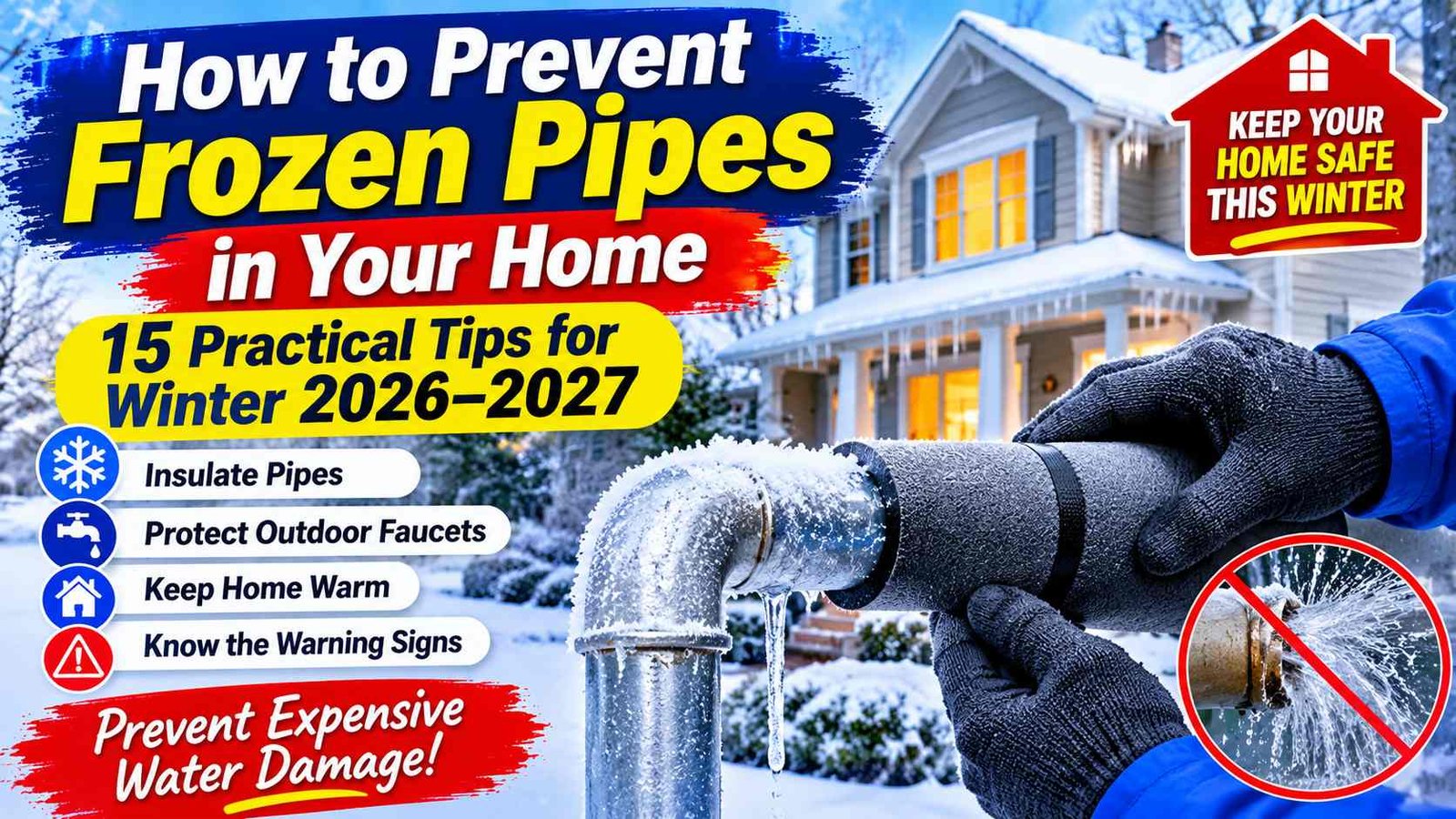
How to Prevent Frozen Pipes in Your Home: 15 Practical Tips for Winter 2026–2027
Winter can create serious plumbing problems for homeowners across the United States. When temperatures drop below freezing, water inside exposed pipes can freeze, expand, and put pressure on the pipe walls. This may cause a pipe to crack or burst, resulting in water damage, expensive repairs, and disruption to your daily life.
The good news is that many frozen-pipe problems can be prevented with simple preparation. Whether you live in a cold northern state, a mountain region, or an area that experiences occasional winter freezes, protecting your plumbing before the cold weather arrives can save time and money.
In this guide, we explain 15 practical ways to prevent frozen pipes, identify warning signs, respond safely when a pipe freezes, and prepare your home for winter 2026–2027.
Why Do Water Pipes Freeze in Winter?
Water pipes freeze when the temperature around them becomes cold enough for the water inside to turn into ice. Pipes located in unheated or poorly insulated areas are especially vulnerable.
Common locations where pipes may freeze include:
- Unheated basements and crawl spaces.
- Attics and garages.
- Exterior walls with insufficient insulation.
- Outdoor faucets and garden hose connections.
- Water supply lines near windows, doors, and air leaks.
- Cabinets beneath kitchen and bathroom sinks.
When water freezes, it expands. The pressure created inside a closed pipe can cause cracks or bursts. A damaged pipe may release a large amount of water after the ice begins to thaw.
15 Practical Ways to Prevent Frozen Pipes
1. Insulate Exposed Water Pipes
Pipe insulation is one of the most useful ways to protect plumbing during winter. Check pipes in basements, crawl spaces, garages, attics, and other cold areas. Use suitable foam pipe insulation or another product designed for your pipe type and location.
Pay particular attention to pipes running along exterior walls. Follow the insulation manufacturer's installation instructions and make sure vulnerable sections are properly covered.
2. Seal Gaps Around Pipes and Walls
Cold air can enter your home through small openings around plumbing lines, foundation walls, windows, and doors. These drafts can expose nearby pipes to freezing temperatures.
Inspect areas where pipes enter or leave the building. Use appropriate caulk, weatherstripping, or expanding foam where suitable. Do not block required ventilation openings or create unsafe conditions around heating equipment.
3. Disconnect Outdoor Garden Hoses
Before freezing weather arrives, disconnect garden hoses from outdoor faucets. Drain the hoses and store them in a protected location.
Water left inside a connected hose can freeze and contribute to damage at the faucet or connected plumbing. If your home has separate indoor shut-off valves for outdoor faucets, follow the manufacturer's or plumber's winterization instructions.
4. Protect Outdoor Faucets
Outdoor faucets are exposed directly to cold weather. After disconnecting hoses, consider using an outdoor faucet cover designed for freezing conditions.
If the faucet has an indoor shut-off valve, close it as directed and drain the outside section where the plumbing design allows. If you are unsure how your outdoor faucet is connected, ask a licensed plumber for guidance.
5. Keep Your Home Warm During Cold Weather
Maintain a consistent indoor temperature during periods of extreme cold. Avoid turning the heating system off completely when temperatures fall below freezing, especially if water pipes run through exterior walls or unheated areas.
If you plan to travel during winter, arrange for someone to check your property or use a suitable temperature-monitoring system. The American Red Cross advises keeping the thermostat set to at least 55°F when leaving a home during cold weather.
6. Open Kitchen and Bathroom Cabinet Doors
Some water supply pipes are located inside cabinets beneath sinks. During severe cold, opening cabinet doors can allow warmer indoor air to circulate around these pipes.
This is particularly useful for sinks installed against exterior walls. Move household cleaners, medicines, and other hazardous products out of children's reach before leaving cabinet doors open.
7. Let Vulnerable Faucets Drip During Severe Freezes
When temperatures become extremely low, a slow drip from a faucet connected to vulnerable plumbing may help reduce the risk of freezing by keeping water moving.
Follow local water utility guidance and use this measure when appropriate. A dripping faucet is not a substitute for proper pipe insulation or fixing drafts. If you use this method, collect the water where practical to avoid unnecessary waste.
8. Keep Garage Doors Closed
Some homes have water supply lines running through garages. Leaving the garage door open for long periods can expose these pipes to freezing outdoor air.
Keep the garage door closed during cold weather, especially overnight. Check for gaps around the garage door and consider suitable weatherstripping if cold air is entering the space.
9. Insulate Your Basement and Crawl Space
Basements and crawl spaces can become extremely cold during winter. Inspect these areas for broken windows, gaps, damaged insulation, and drafts.
Improve insulation where needed and protect exposed water lines. Crawl-space ventilation and moisture control should follow local building requirements, so consult a qualified professional before changing vents or sealing the space.
10. Know Where Your Main Water Shut-Off Valve Is Located
Every homeowner should know how to shut off the main water supply. If a pipe bursts, turning off the water quickly can reduce flooding and property damage.
The main shut-off valve may be located in a basement, utility room, garage, crawl space, or near the point where the water supply enters the house. Learn how it operates and make sure other household members know where it is.
11. Check Pipes Near Exterior Walls
Pipes installed inside exterior walls may be exposed to cold temperatures, especially in older homes with insufficient insulation.
Look for plumbing near outside-facing kitchen and bathroom walls. If you regularly experience freezing in a particular area, ask a licensed plumber or insulation professional to assess the pipe location and recommend a lasting solution.
12. Repair Leaking Faucets and Plumbing Connections
A leaking faucet or loose plumbing connection should not be ignored before winter. Although a small leak does not automatically mean a pipe will freeze, it can indicate a maintenance problem that deserves attention.
Repair dripping faucets, damaged fittings, and visible leaks before temperatures fall. If you notice moisture, corrosion, or water stains around pipes, investigate the cause rather than simply covering the area with insulation.
13. Maintain Your Heating System
Your home's heating system helps maintain safe indoor temperatures during winter. Schedule routine maintenance before the coldest months arrive.
Replace filters as recommended, keep heating vents clear, and check that the thermostat works correctly. If your heating system stops working during freezing weather, arrange professional service promptly.
14. Prepare Your Home Before a Winter Vacation
Leaving a home unattended during freezing weather can increase the risk of unnoticed plumbing damage. Before travelling, check the heating system, inspect exposed pipes, and confirm that the main water shut-off valve is accessible.
Keep the indoor temperature at a safe level, arrange for someone to check the property, and consider a water-leak or low-temperature alarm. If you plan to shut off and drain the plumbing system, have a qualified professional explain the correct procedure for your home.
15. Schedule a Professional Winter Plumbing Inspection
A professional inspection can help identify vulnerable pipes, damaged insulation, hidden leaks, and plumbing problems before winter becomes severe.
Ask a licensed plumber to inspect exposed water lines, outdoor faucets, pipe insulation, shut-off valves, and areas that have frozen in previous winters. Early maintenance may help prevent an emergency repair during a cold spell.
Warning Signs That a Water Pipe May Be Frozen
Frozen pipes are not always easy to identify immediately. Watch for these warning signs during freezing weather:
- Only a small trickle of water comes from a faucet.
- No water comes from one or more taps.
- Visible frost appears on an exposed pipe.
- A pipe looks swollen, cracked, or damaged.
- Unusual smells come from a drain or faucet.
- Water stains or unexpected moisture appear near plumbing.
If one faucet stops working during a freeze, check other faucets carefully. A frozen pipe may affect only one section of the plumbing system.
What Should You Do If a Pipe Freezes?
If you suspect a frozen pipe, act carefully. A frozen pipe may already be damaged, and water can begin leaking when the ice melts.
- Keep the affected faucet open: This may help water flow as the ice melts.
- Locate the frozen section: Check accessible pipes near exterior walls, basements, crawl spaces, and other cold areas.
- Apply gentle heat only if safe: A hair dryer or an appropriate electric heating pad may be used on an accessible pipe, following the device instructions and keeping electrical equipment away from water.
- Never use an open flame: Do not use a blowtorch, propane heater, kerosene heater, or other flame-producing device to thaw a pipe.
- Watch for leaks: Check the pipe carefully as it thaws.
- Call a licensed plumber: Get professional help if the pipe is inaccessible, badly frozen, damaged, or does not begin to thaw safely.
If a pipe has burst or water is leaking, shut off the main water supply if it is safe to do so. Avoid standing water near electrical equipment and contact the appropriate professionals.
How Much Can Frozen Pipe Damage Cost?
The total cost of frozen-pipe damage depends on the location of the pipe, the amount of water released, the materials involved, and the extent of damage to walls, flooring, insulation, and personal belongings.
Possible expenses may include:
- Emergency plumbing service.
- Pipe repair or replacement.
- Water extraction and drying.
- Wall, ceiling, and flooring repairs.
- Replacement of damaged furniture or belongings.
- Mold assessment and remediation when necessary.
There is no single repair price that applies to every home. Ask local licensed professionals for written estimates and check your homeowners insurance policy to understand what types of water damage may be covered.
Winter Plumbing Checklist for Homeowners
Use this simple checklist before the first major freeze in your area:
- Inspect exposed water pipes.
- Install suitable pipe insulation.
- Disconnect and drain garden hoses.
- Protect outdoor faucets.
- Seal appropriate gaps around plumbing openings.
- Check basement and crawl-space conditions.
- Test the heating system.
- Locate the main water shut-off valve.
- Check for plumbing leaks.
- Prepare your home before winter travel.
- Save the contact details of a licensed emergency plumber.
When Should You Call a Professional Plumber?
Some winter maintenance tasks can be completed by homeowners, but plumbing repairs and difficult frozen-pipe situations may require professional assistance.
Contact a licensed plumber if:
- A pipe has burst or is leaking.
- You cannot locate the frozen section.
- The frozen pipe is inside a wall or ceiling.
- You notice repeated freezing in the same location.
- Your main shut-off valve is damaged or difficult to operate.
- You need plumbing changes or permanent pipe relocation.
Check local licensing requirements, read recent customer reviews, and request a written estimate before approving non-emergency work.
Frequently Asked Questions About Frozen Pipes
1. At what temperature do water pipes freeze?
Water freezes at 32°F (0°C), but pipes can freeze under different conditions depending on insulation, airflow, pipe location, and how long they are exposed to cold temperatures.
2. Which pipes are most likely to freeze?
Pipes in unheated basements, crawl spaces, garages, attics, exterior walls, and outdoor locations are generally more vulnerable to freezing.
3. Should I leave my faucet dripping during winter?
A slow drip may help reduce freezing risk in vulnerable plumbing during severe cold. Follow local water utility recommendations and remember that this does not replace insulation and other preventive measures.
4. Should I turn off the water when travelling in winter?
It depends on your plumbing system, heating arrangements, and the length of your trip. Ask a licensed plumber about the safest approach for your property before shutting off or draining the system.
5. Can frozen pipes thaw on their own?
They may thaw when temperatures rise, but waiting can be risky. A frozen pipe may be damaged and begin leaking as the ice melts. Monitor the situation and contact a plumber when necessary.
6. Is it safe to use a blowtorch to thaw frozen pipes?
No. Never use a blowtorch or another open-flame device. Use only safe, suitable heating methods according to manufacturer instructions, or call a licensed plumber.
7. Does homeowners insurance cover frozen pipes?
Coverage depends on the policy, the circumstances of the damage, and any applicable exclusions or maintenance requirements. Review your policy and contact your insurance company for specific information.
8. When should I prepare my home for winter?
Complete your winter plumbing inspection before freezing temperatures arrive in your area. Preparing in autumn gives you time to repair leaks, insulate pipes, and address vulnerable areas.
Conclusion: Protect Your Plumbing Before Winter Arrives
Frozen pipes can cause major inconvenience and expensive property damage, but preparation can reduce the risk. Insulating exposed pipes, disconnecting garden hoses, protecting outdoor faucets, sealing drafts, maintaining indoor heat, and knowing where your main shut-off valve is located are practical steps every homeowner should consider.
Do not wait until the first major freeze to inspect your plumbing. Use this winter checklist, arrange professional maintenance where needed, and prepare your home for the colder months of 2026–2027.
A little preparation today can help protect your home, plumbing system, and budget throughout winter.
Looking for home improvement professionals or local service providers? Explore Leadsturn to discover business and service listings.
Disclaimer: This article provides general home-maintenance information, not professional plumbing or engineering advice. Follow local utility guidance, product instructions, and applicable building codes. Contact a licensed professional for repairs or unsafe conditions.